What is a graph platform?
A graph platform is an integrated set of tools for modeling, integrating, visualizing, analyzing, and building applications with connected data.
Graph technology, and specifically graph visualization and analysis techniques employed by graph platforms, can be applied across many industries to address complex questions such as:
- How can I deliver key insights to decision makers at the right time?
- How can I optimize my schedules or processes?
- Are there hidden relationships in the data that can provide clues to understanding?
- Do trends exist in the data that can help with decision making?

A graph platform enables business insights through powerful graph visualization and analysis.
Tom Sawyer Perspectives, the industry-vetted graph platform
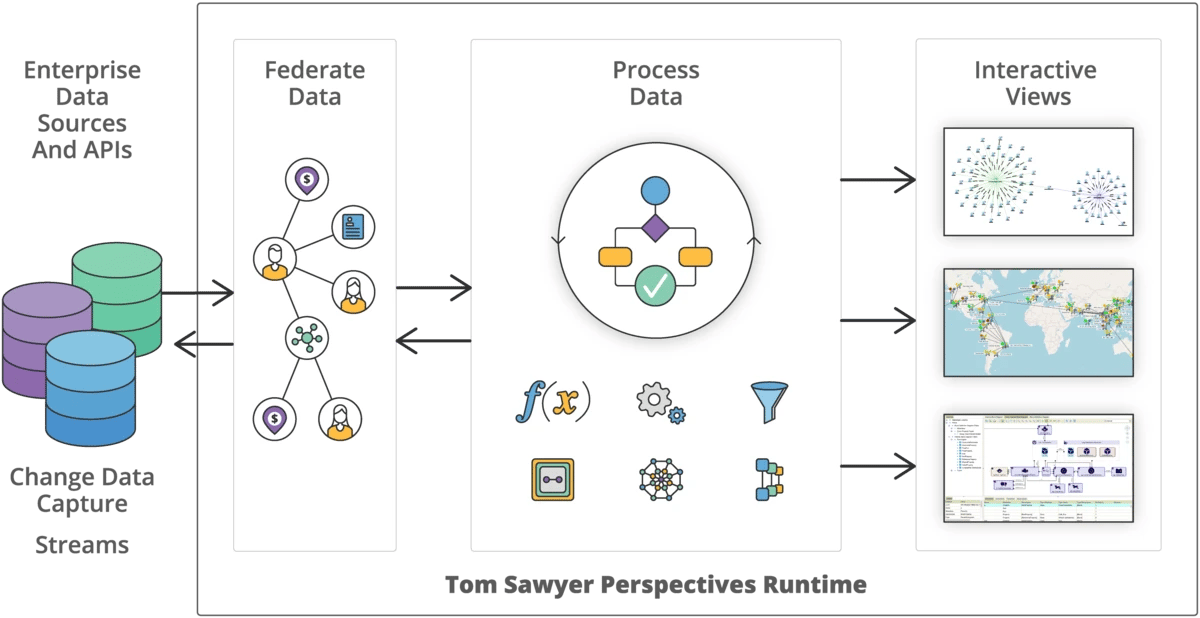
The Tom Sawyer Perspectives graph platform enables enterprises to produce interactive graph visualization and analysis applications from federated data.
For more than 30 years, Tom Sawyer Software has developed graph-based applications and engineered a cohesive set of tools for working with connected data. These tools are agnostic to how data is stored and can integrate with other software.
The Tom Sawyer Perspectives platform is an SDK and low-code development platform that provides enterprises with the tools they need to build and deploy innovative graph applications.
Graph power is at the core of Tom Sawyer Perspectives
Tom Sawyer Perspectives and the Tom Sawyer Software team help organizations build a solid foundation for long-term success with graph technology.
The platform supports every stage of graph application development, including:
- developing your information schema,
- accessing and analyzing your data with its run-time graph model,
- designing best-in-class visualizations, and
- deploying your application.
Knowledge graphs
Tom Sawyer Perspectives supports organizations at different stages of knowledge graph development, from building a new knowledge graph to working with an established one.
The schema editor lets teams create a graph-based schema on top of legacy relational data or work directly with an existing graph store, linking data from one or multiple sources.
Graph model
Graph applications depend on a graph model that describes how information is connected. The model captures relationships between data elements, allowing applications to analyze and present connected data as a whole.
Tom Sawyer Perspectives uses an in-memory graph model that brings together data from relational databases, graph databases, files, APIs, and other enterprise systems. Design-time tools support model creation, while APIs give developers programmatic access when needed.
Graph application framework
Graphs organize information in a way that reflects how people understand relationships and context. Users also need intuitive ways to explore, search, and interact with graphs to find the answers they need.
Tom Sawyer Perspectives development tools work directly with the graph model to support interaction and authoring within graph-based applications.
Data-driven development
A picture can be worth a thousand words, or even a thousand hours. The right visualization helps users interpret information and understand what matters most.
Every data element in the schema can convey meaning through the nodes and edges shown on screen. Tom Sawyer Perspectives helps teams quickly experiment with how data is organized, analyzed, visualized, and explored to create more useful applications for end users.

Graph databases
A graph database stores and queries connected data, while a graph platform provides broader capabilities for building applications with that data.
Tom Sawyer Perspectives works with graph databases and other enterprise data sources, while Tom Sawyer Software helps teams evaluate data store options through requirements analysis and rapid prototyping.
Deployment
Design and package your Tom Sawyer Perspectives web application for deployment in your preferred environment. Applications can use your existing authentication mechanisms to secure access to data. You can deploy your application behind a load balancer and configure automatic scaling to meet demand.
The graph platform supports flexible deployment across enterprise environments, making it easier to deliver graph applications where users need them.
Knowledge graph as schema
Is your data ready to deliver the answers and insights your end users need?
Most databases are designed to address their initial use cases but may present significant limitations when a new question arises, a different analysis is needed, or a new business workflow is required. Legacy databases often reflect the limitations of their original software design, even as business structures and workflows evolve.
The in-memory graph in Tom Sawyer Perspectives addresses this challenge by helping you design the data schema you wish you had. Your data may be distributed and disconnected, but the in-memory graph lets you work with data integrated in real time to address your users’ needs.
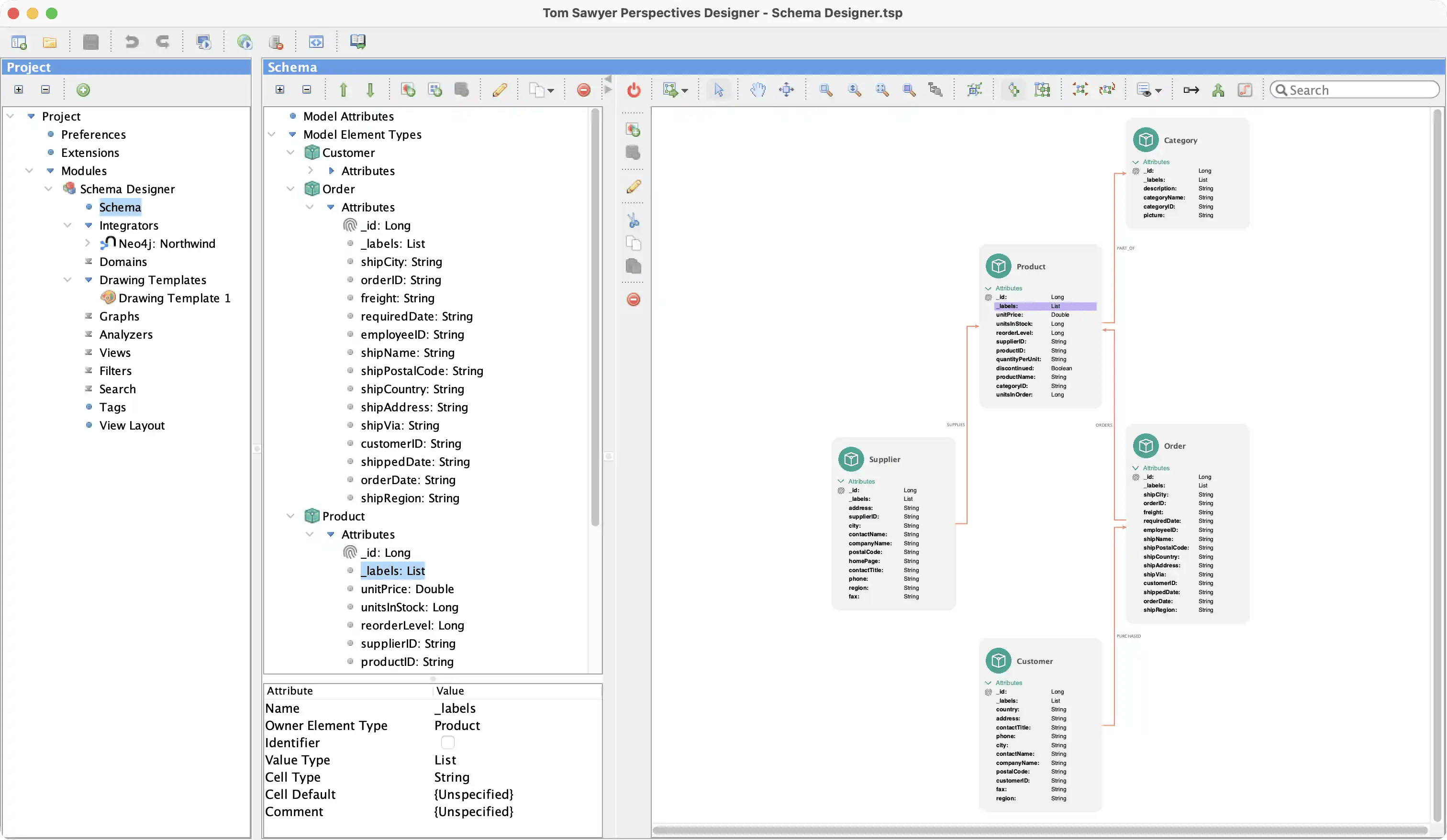
The Tom Sawyer Perspectives schema editor.
Tom Sawyer Perspectives allows you to link to data from multiple data sources and connect it in a unified schema that delivers the power you expect from graphs, and the seamless knowledge graph experience your users need.
The schema provides a solid foundation to build your application quickly.
Graph-native application framework
Knowledge graphs are popular because they align closely with how people understand relationships in the world.
The Tom Sawyer Perspectives model supports intuitive data navigation and natural interaction with knowledge graphs at the application layer.
Tom Sawyer Perspectives provides the tools to create applications that put the value of graphs into users' hands.
A graph application platform should give users more than a static view of connected data. It should support interactive exploration, multiple coordinated views, filtering, layout, and analysis so users can move from complex data to practical insight.
Key features for graph-based application development include:
- Flexible dashboard layout design
- Synchronization across multiple views
- Five fully automated graph layouts
- Grouping, nesting, and navigation
- Powerful filtering and search
- Timeline analysis
- Rich node and edge annotations
- Graph analytics
- Internationalization support
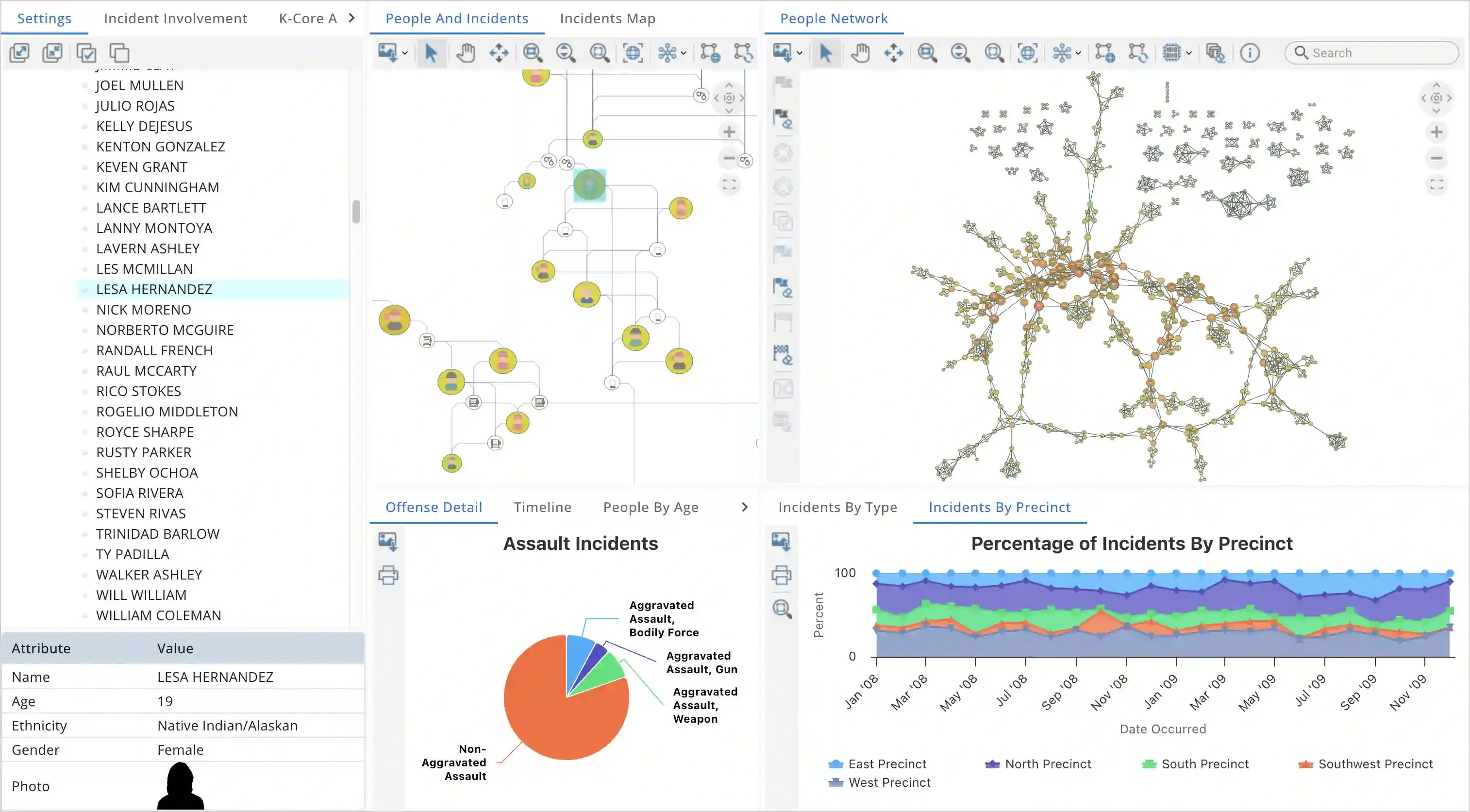
To get started with Tom Sawyer Perspectives:
- Design your schema with the Tom Sawyer Perspectives schema editor.
- Define how schema elements and data should be displayed, in one or several different views.
- Arrange your views to meet the needs of your users.
We take care of synchronization across your views.
Watch this informative YouTube video for a tour of Tom Sawyer Perspectives Designer:
Case Study: Use-case-driven design
This example application was developed in cooperation with Sanofi and highlights how every element of the drawing may be used to communicate details essential to the user.
Every node and edge, and how they are arranged in the drawing can be used to communicate multiple variables that are meaningful for instant orientation even in the most complex of domains. Embed images, highlight paths, apply color, style, shape and size to draw the user's attention to what matters.
Build the graph that tells your data story clearly and concisely.

Application Deployment
Tom Sawyer Software's graph-based application platform is at home in any environment. We give you the tools to get started with your first application from day one. Whether you need to quickly deploy your application on your favorite cloud hosting platform, such as AWS or Azure, or you want to deploy your application to Docker, Kubernetes, or Terraform, we have you covered.

Local Deployment
On the desktop, or in a simple web app, if your objective is to serve small groups of people in your organization, Tom Sawyer Perspectives can help you build and deploy quickly.

Private Cloud
Do you need an enterprise tool that fits into your secure private cloud architecture? Tom Sawyer Perspectives supports your authentication solution and can scale up to meet the needs of your growing internal user base.
